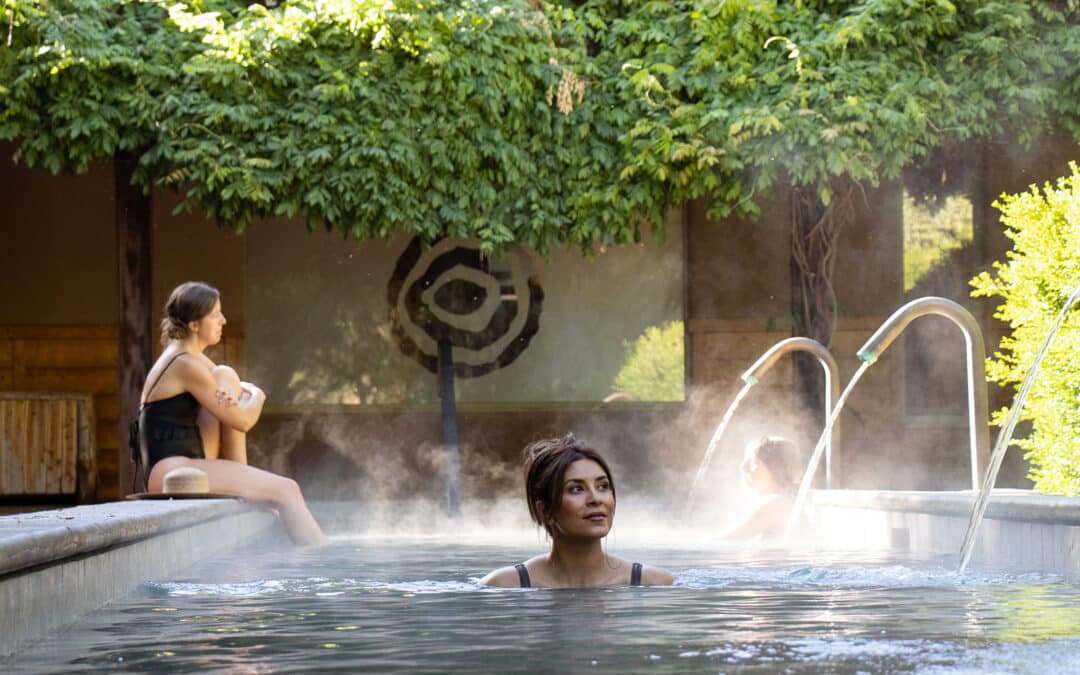
Most people arrive at Ojo knowing they need a break. What surprises them is the kind of rest they actually find.
A wellness retreat offers something that a vacation typically does not: an environment specifically designed to reduce stimulation, restore the nervous system, and give the mind space to settle. The difference is not just in what is available, but in what is absent. No obligations, no urgency, no noise pulling attention in competing directions.
At Ojo Santa Fe and Ojo Caliente, the environment has been deliberately shaped around water, nature, movement, and stillness. What follows is an honest account of why that combination supports mental health, and what it looks like in practice at both properties.
The Research Behind the Experience
The case for nature-based restoration is not anecdotal. Studies consistently show that time in natural environments reduces cortisol, the body’s primary stress hormone, and that immersion in warm water activates the parasympathetic nervous system, the state the body enters when it is genuinely safe and at rest.
Thermal soaking in particular has been associated with improved sleep quality, reduced anxiety, and lower blood pressure. These are not side effects of relaxation. They are physiological responses to specific conditions: warmth, mineral content, reduced sensory input, and time.
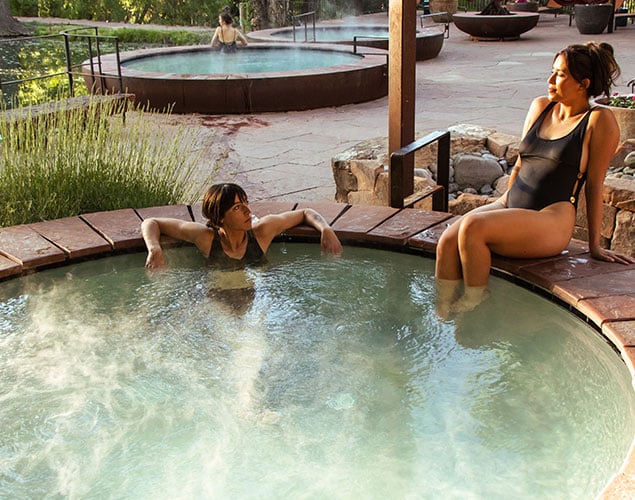
At Ojo Caliente, guests soak in geothermal mineral water drawn from four distinct sources. Iron supports circulation and recovery. Lithia has long been associated with mood regulation. Soda soothes skin and soft tissue. Trace arsenic, present in naturally occurring concentrations, is thought to ease inflammation. The water is sulfur-free and has been drawing people for its properties since long before the resort was established in 1868.
At Ojo Santa Fe, the spring-fed thermal pools draw from a pure aquifer beneath the property’s 77 acres in the La Cienega Valley. The water is gently heated, the setting is shaded by cottonwoods, and the pools are arranged to encourage quiet rather than conversation.
What Do You Do at a Wellness Retreat?
A standard trip away relocates stress rather than interrupting it. You are still checking your phone, still making decisions, still moving at a pace. A wellness retreat works differently because the environment itself does a portion of the work.
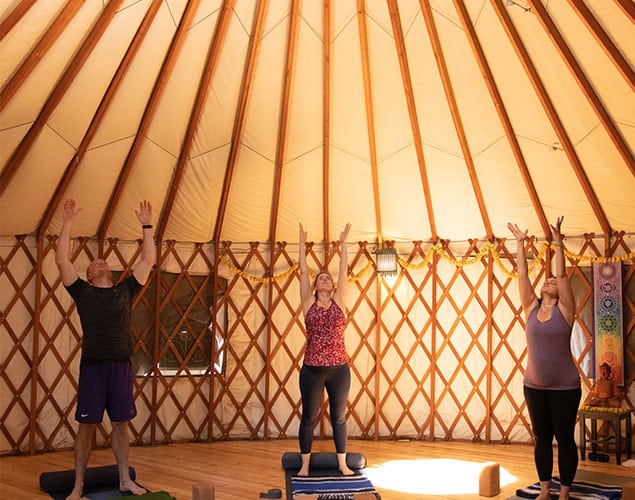
At Ojo, a typical day might look like this: a complimentary morning yoga class before the pools fill, time moving between the thermal soaking areas, a slow meal at the Blue Heron Restaurant at Ojo Santa Fe or the Artesian at Ojo Caliente, an afternoon spa treatment, and an evening soak as the light changes over the landscape. There is no schedule beyond what you choose. There is no pressure to fill time.
For many guests, the mental health benefit is less about any single treatment or activity and more about the cumulative effect of an extended period of reduced stimulation. That rhythm, repeated over two or three days, produces something that a single massage or a night at a hotel does not.
The Role of Nature in Emotional Renewal
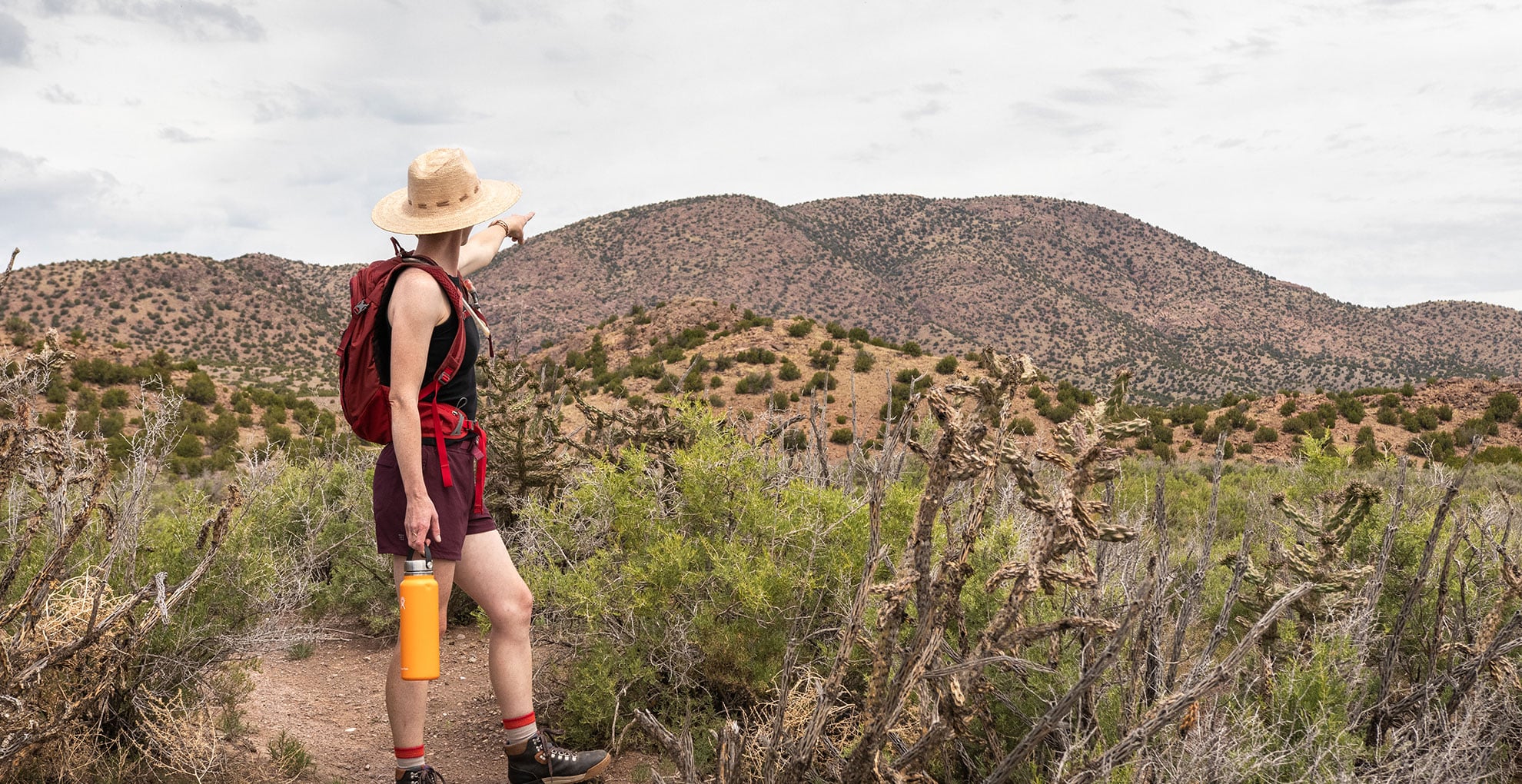
Both properties place guests directly in a landscape that asks for attention. The 22 miles of BLM trails at Ojo Caliente move through high desert mesa and open sky. The trails at Ojo Santa Fe wind through cottonwood groves beside ponds. Walking in these conditions, without a destination or a time pressure, is a genuinely different experience from urban exercise.
Research on what is sometimes called attention restoration theory suggests that natural environments allow the directed attention we use for work and decision-making to recover. The mind is not doing nothing in nature. It is doing a different kind of work, one that replenishes rather than depletes.
Guests who arrive exhausted and spend two or three days walking, soaking, and eating well often describe a shift in mental clarity that feels disproportionate to the time spent. That disproportionate return reflects the depth of the deficit most people are operating from without noticing.
The Benefits of a Wellness Retreat That Travel Home With You
The most durable benefit of a wellness retreat is often what it reminds you of rather than what it teaches you.
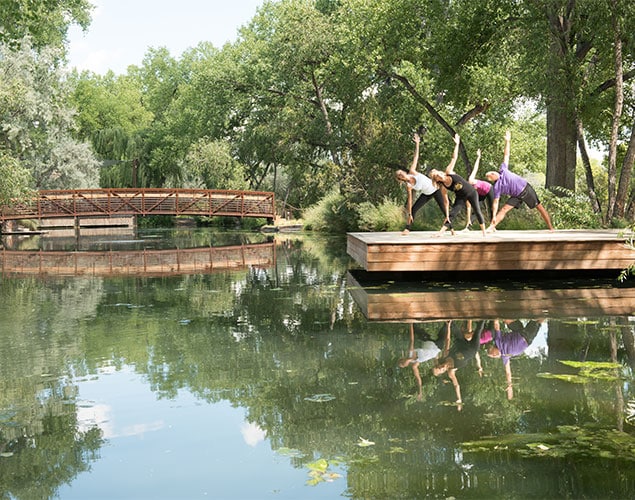
Complimentary morning yoga at both properties follows a similar rhythm: breath, movement, and a period of stillness. For many guests, it is the first extended practice of any kind they have undertaken in months. The instruction is gentle and accessible regardless of experience level.
Spa treatments at both properties are built around hydrotherapy principles, using warm water, therapeutic pressure, and intentional stillness to support the work the pools have already begun. These treatments extend the experience rather than add to it.
Guests regularly leave Ojo with a renewed relationship to practices they already knew about but had stopped using: walking slowly, sitting quietly, sleeping without a screen. The retreat does not introduce these things so much as demonstrate, again, that they work.
Planning a Wellness Retreat in New Mexico
One key benefit of a wellness retreat is its ability to provide personalized paths for growth. Unlike a one-size-fits-all vacation, wellness retreats are thoughtfully curated to meet diverse needs and goals.
From workshops that explore mindfulness to spending time in shared pools, the retreat experience is designed to help you grow in ways that resonate deeply with you. Ojo offers activities catering to a range of interests, ensuring every guest finds something supporting their individual growth.
The variety of experiences allows you to connect with your inner self, explore new perspectives, and gain the clarity you need to continue your wellness journey even after the retreat concludes.
Come Back to Yourself
The high desert of Northern New Mexico has been drawing people seeking restoration for centuries. At Ojo, that tradition is still the point.
A retreat here is not a reward for getting everything done. It is a recognition that rest is part of the work, and that the kind of rest that actually restores you requires a particular kind of environment.
Both properties are ready when you are.
Explore Ojo Santa Fe | Discover Ojo Caliente | View Specials and Packages
Frequently Asked Questions
What do you do at a wellness retreat?
At Ojo, a day typically includes morning yoga, time in the thermal or mineral pools, meals built around seasonal and locally sourced ingredients, optional spa treatments, and walking the on-property trails. There is no fixed itinerary. The experience is shaped by what you need rather than a prescribed schedule.
What are the benefits of a wellness retreat?
Research consistently links time spent in natural environments and thermal soaking to reduced cortisol levels, improved sleep quality, lower blood pressure, and reduced anxiety. Beyond the physiological effects, guests commonly report improved mental clarity, a renewed relationship to rest, and sustainable practices like yoga or mindfulness that carry forward after the visit.
Do wellness retreats actually help with mental health?
The evidence is consistent: time in natural environments reduces cortisol, thermal soaking activates the parasympathetic nervous system, and extended periods away from digital stimulation improve mood and sleep quality. A well-designed retreat creates the conditions for these responses to occur together. Ojo is not a clinical environment, and guests with serious mental health concerns should work with a qualified professional alongside any retreat experience.
What makes a wellness retreat in New Mexico different?
Northern New Mexico’s high-desert landscape, elevation, and quality of light create conditions that are difficult to replicate elsewhere. At Ojo specifically, the combination of geothermal mineral water at Ojo Caliente or spring-fed thermal pools at Ojo Santa Fe, on-property trails, farm-rooted dining, and yoga produces an experience grounded in the place’s specific character rather than a generic spa formula.
How is Ojo Santa Fe different from Ojo Caliente for a wellness retreat?
Ojo Santa Fe sits on 77 acres in the La Cienega Valley, 20 minutes from downtown Santa Fe, with spring-fed thermal pools drawn from a pure aquifer. Ojo Caliente is set in open high desert between Taos and Santa Fe, with geothermal mineral hot springs and a more remote character. Both offer yoga, spa treatments, and dining, but the mood and landscape of each property are distinct.
Can I visit for just one day?
Yes. Both properties welcome day guests for soaking, spa treatments, and dining from 10 am to 10 pm. Overnight guests have access to complimentary morning yoga and an extended soaking experience across their full stay.
What should I book in advance for a wellness retreat?
Spa treatments book out quickly, particularly on weekends. If a specific treatment is a priority, book it before your arrival date. Overnight accommodations at both properties can also fill up well in advance during peak seasons. Day-use soaking access is generally available without advance booking, though reservations are recommended.
Ready for your yoga-inspired Ojo escape?
Explore Ojo Spa Resorts and start planning your restorative Ojo getaway.
The waters are waiting.