

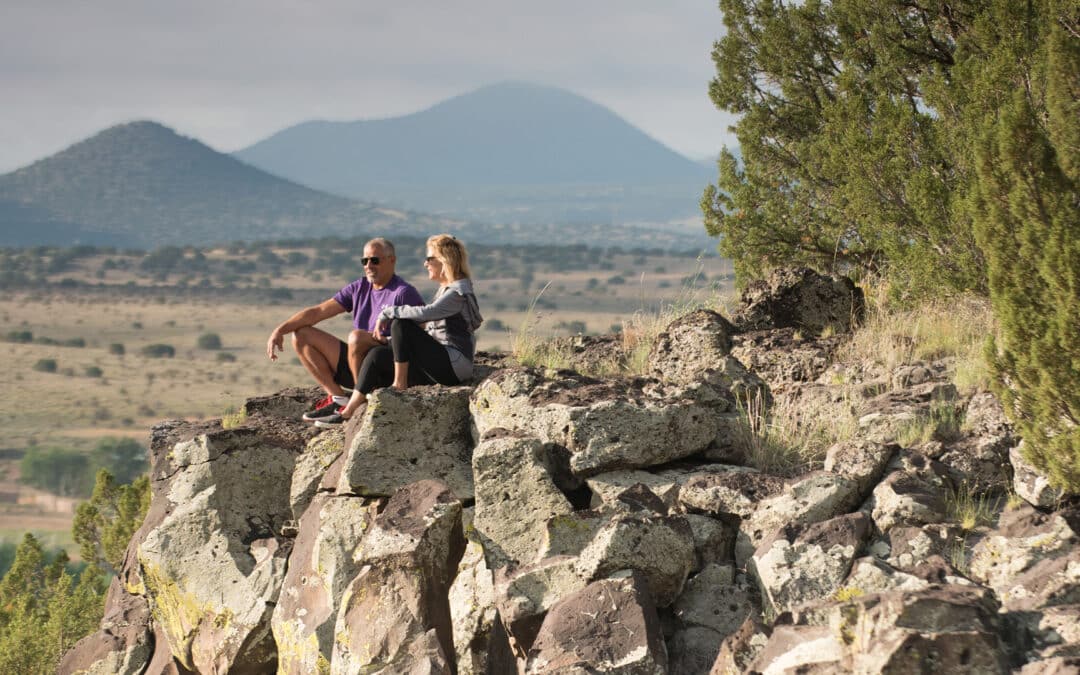
Ojo Santa Fe sits in the La Cienega Valley, 20 minutes south of downtown Santa Fe, on 77 acres of high desert that most visitors never realize exists until they turn off the highway and the landscape opens up around them.
That location is part of what makes an Ojo stay different from a standard city hotel stay. You are close enough to Santa Fe to explore it fully, but you are also immediately surrounded by a valley with its own history, trails, and reasons to stay close to the property. Some of the best things to do on a trip here are within a five-minute drive. Others are worth a half-day in either direction.
This guide covers both.
Right Here: La Cienega Valley
Before heading anywhere, it is worth noting that the land surrounding Ojo Santa Fe is worth exploring in its own right. Five miles of private hiking trails wind through the property and into the surrounding high desert, with views across the valley toward the Jemez Mountains. These trails are available to all overnight guests at no charge and require nothing more than sturdy shoes and a water bottle.
The valley has been continuously inhabited for over 400 years. Spanish traders used it as a resting stop on the Camino Real between Mexico City and Santa Fe. The mature cottonwood trees lining Cienega Creek, the working farms, and the Pueblo-style architecture throughout the area are all expressions of that long, layered history. Walking the trails with that context in mind changes what you notice.
Five Minutes Away: El Rancho de Las Golondrinas
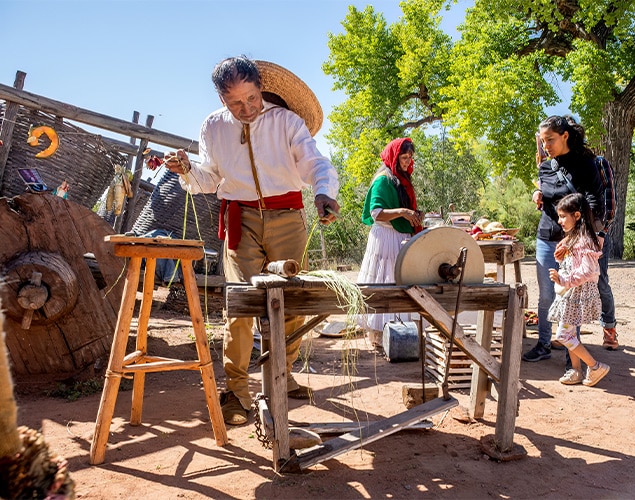
Just down the road from Ojo Santa Fe, El Rancho de Las Golondrinas is a ranch-museum from the 1700s that gives you the most concentrated sense of La Cienega’s past available anywhere in the region. The site allows visitors to immerse themselves in the rich history and culture of New Mexico through 30 restored historical buildings, working interpreters demonstrating traditional trades, a full sheep farm, and a 35-acre nature preserve where more than 900 species of flora and fauna have been documented.
Ojo Santa Fe includes complimentary daily tour passes to Las Golondrinas for every overnight guest. The museum is open June through October, so if your stay falls within that window, a morning here followed by an afternoon back at the thermal pools is a genuinely full and unhurried day.
Special events throughout the summer include harvest and wine festivals. October brings Spirits of New Mexico, an evening of campfire storytelling rooted in Northern New Mexico folklore. Visit golondrinas.org for the current calendar.
Twenty Minutes: La Cieneguilla Petroglyphs
A Hike Into Indigenous History
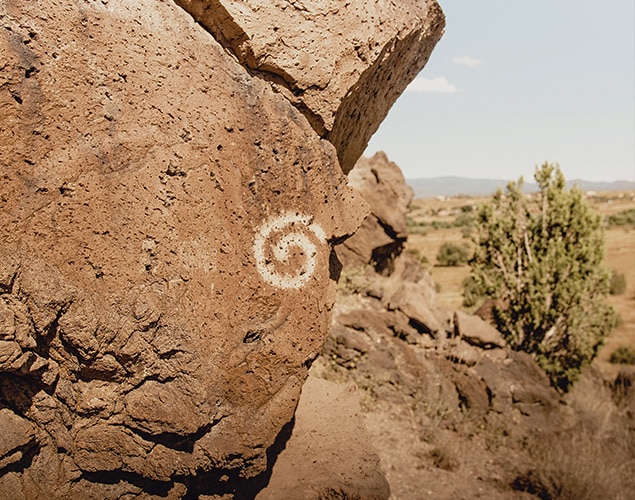
The La Cieneguilla Petroglyph Site sits north of the Santa Fe River and has an especially high concentration of ancient markings, overlooking the verdant La Cienega Valley below. The petroglyph panels are located just beneath the top of the mesa, and at the top of the trail, the panels to the left are particularly notable, offering beautiful views of the Santa Fe River and the mountains. The hike requires sturdy boots and the ability to navigate rocky terrain, with steep sections in parts.
The panels here are primarily Ancestral Puebloan in origin and represent some of the most accessible rock art in the Santa Fe area. Budget two hours for the hike and plan to arrive in the morning before the sun is directly overhead on the exposed mesa.
Forty Minutes: Kasha-Katuwe Tent Rocks National Monument
Kasha-Katuwe Tent Rocks offers phenomenal rock structures, slot canyons, and desert magic, located about 40 minutes south, between Albuquerque and Santa Fe at Cochiti Pueblo.
The formations here are volcanic in origin, cone-shaped pumice and tuff structures that rise from the canyon floor in clusters that seem improbable until you are standing among them. The slot canyon trail is narrow, shaded, and unlike anything else in the region. The upper canyon opens to a mesa with views across the Rio Grande Valley.
This is a half-day trip. Bring water, wear layers in cooler months, and go early in summer when temperatures on the exposed upper trail climb quickly. Check monument hours before going, as Kasha-Katuwe periodically closes for Pueblo ceremonies.
Forty-Five Minutes: Bandelier National Monument
Bandelier’s ancient cliff dwellings and stunning vistas make it one of the most memorable destinations near Santa Fe. The site preserves the homes of Ancestral Puebloan people who lived in caves carved into the soft volcanic tuff of Frijoles Canyon for hundreds of years before departing in the late 1500s. The main loop trail through the canyon takes about 90 minutes and passes dozens of dwelling sites, some with wooden ladders climbing to rooms built directly into the cliff face.
Bandelier is a short drive away and offers stunning vistas throughout. The canyon itself stays shaded longer than the surrounding mesa, making early-morning visits particularly good in the warmer months.
Twenty Minutes the Other Direction: Downtown Santa Fe
For a half-day in the city, the Georgia O’Keeffe Museum, the Museum of International Folk Art on Museum Hill, Canyon Road’s galleries, and the Santa Fe Farmers Market (Saturday mornings at the Railyard) each stand on their own as worthwhile stops. Santa Fe’s downtown is walkable and compact, which means you can cover a lot in a few hours before returning to the valley.
Our restaurants prioritize fresh, seasonal ingredients, often using greens, vegetables, and herbs grown at the Ojo Farm in Ojo Caliente.
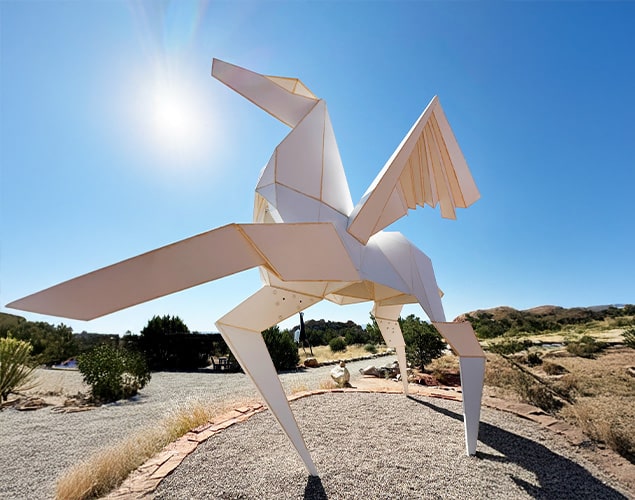
But the stunning views are only the beginning of the eye candy this studio has to offer. Nestled within this gorgeous property is the “Origami in the Garden” exhibit, featuring over a dozen large-scale outdoor origami sculptures that were dreamed and realized by Kevin and Jennifer as gorgeous representations of the spirit of New Mexico. These larger-than-life sculptures adorn the botanical gardens, inviting guests to take in the majesty of these incredible works as they are embraced by the verdant desert wilds all around them. The crown jewel of the exhibition is Master Peace, a 25 foot tall sculpture of 1,000 stainless steel origami peace cranes atop a black granite base (or pond) below. The monument serves as a mirror that reflects all 1,000 cranes keeping them together forever in a stunning array of artistic skill. This and the other metal-cast origami creations will transport you to a world unlike any you have visited, a dreamscape that will stay with you for the length of your trip and beyond.
Kevin Box Studios is open to the public May through October, Monday through Friday from 9am-1pm. Check out their story and all the eye-catching works these artists have delivered to their community and around the world at outsidetheboxstudio.com.

Marty Sanchez Links de Santa Fe Golf Course
Play on the Desert Greens
For guests seeking a different kind of rhythm—one that includes the satisfying thwack of a perfectly struck ball and panoramic views that go on for miles—the Marty Sanchez Links de Santa Fe is a hidden gem just 15 minutes from Ojo Santa Fe. Nestled among the piñon-dotted foothills of the Ortiz Mountains, this award-winning municipal golf course offers 360-degree views of the Sangre de Cristo, Jemez, Sandia, and Cerrillos mountain ranges, making it one of the most scenic courses in the country.
Whether you’re a seasoned golfer or simply looking to enjoy an afternoon under the open sky, Marty Sanchez delivers with its 18-hole championship course as well as the 9-hole “Great 28” executive course, ideal for beginners or those looking to sharpen their short game. The course’s eco-conscious design reflects the values of land appreciation that tie back to Ojo’s own mission of sustainability and reverence for the earth.
Tee off alongside native grasses, wildflowers, and the occasional rabbit, hawk, or coyote sighting, and enjoy a laid-back game on fairways shaped by the high desert terrain. After your round, swing by The Links Bar & Grill for a bite before making your way back to Ojo Santa Fe, where hot soaking pools and farm-to-table fare await to round out your perfect day. Learn more and book your tee time at linksdesantafe.com.
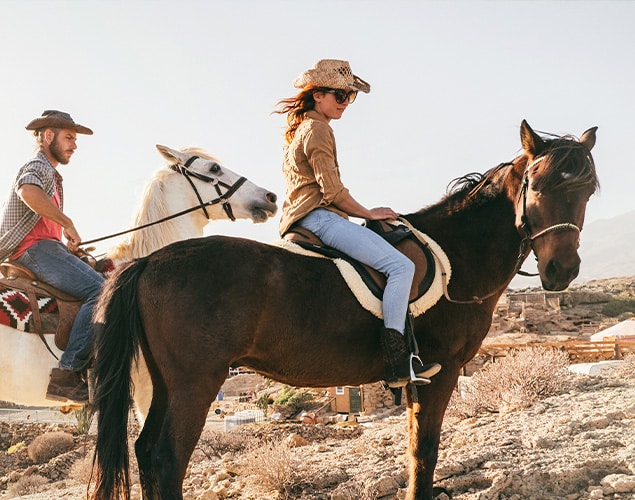
Each of these adventures offers a unique window into the cultural, historical, and artistic soul of Northern New Mexico—and they’re all just a short trip from the peaceful refuge of Ojo Santa Fe. Whether you find yourself hiking through ancient petroglyphs, riding through wild canyons on horseback, or standing in awe before monumental works of folded steel, these experiences offer moments of connection that deepen your journey.
And when the day is done, Ojo is waiting to welcome you back—where the waters are warm, the food is nourishing, and stillness is the only item on your itinerary. So go forth, explore, and let the spirit of the land move through you… before soaking it all in, one blissful moment at a time.
The Valley Rewards Slow Exploration
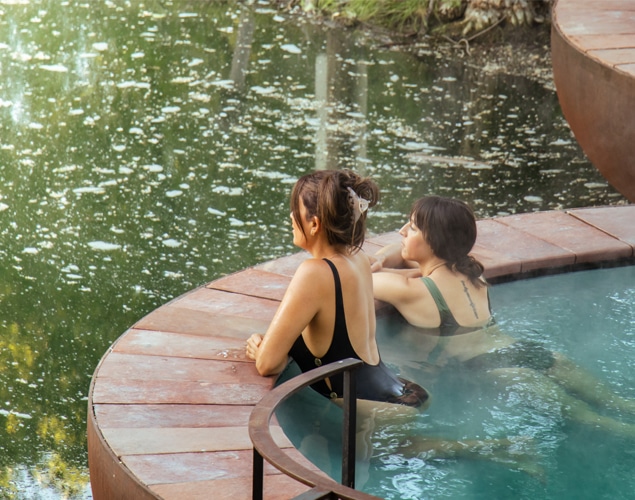
The most common thing guests say when they leave Ojo Santa Fe is that they left too soon. The spring-fed thermal pools and the property’s 77 acres are enough to fill a stay entirely, and many guests prefer it that way.
But when you are ready to step out, the valley has centuries of history and landscape waiting, most of it within a short drive and almost none of it crowded. Return to the water when you are done. It will be right there.
Explore current specials and packages or call (877) 977-8212 to plan your stay.
Related: Ojo Santa Fe Lodging | Ojo Santa Fe Spa | Trails and Activities | Specials and Packages
Frequently Asked Questions
How far is Ojo Santa Fe from downtown Santa Fe?
Ojo Santa Fe is approximately 20 minutes south of downtown Santa Fe via I-25. The drive takes you through the La Cienega Valley and is straightforward from the city center.
Do I need a car to explore the area around Ojo Santa Fe?
Yes. The surrounding attractions are spread across the region and are not accessible by public transit. A rental car is the most practical option for day trips to destinations like Kasha-Katuwe and Bandelier.
Are the Las Golondrinas passes really free for Ojo Santa Fe overnight guests?
Yes. Every overnight lodging guest at Ojo Santa Fe receives complimentary daily tour passes to El Rancho de Las Golondrinas. The museum is open from June through October. Ask at the front desk when you check in.
What is the best time of year to hike near Ojo Santa Fe?
Spring and fall offer the most comfortable hiking conditions, with mild temperatures and lower crowds. Summer mornings are ideal before the afternoon heat builds on exposed trails. Winter hiking is possible on lower elevation trails, but some higher routes close or require additional preparation.
Can I visit La Cieneguilla Petroglyphs on my own?
Yes. The petroglyph site is publicly accessible, though it involves a moderately strenuous hike over rocky terrain. Sturdy footwear is recommended. There is no fee to visit.
Ready for your yoga-inspired Ojo escape?
Explore Ojo Spa Resorts and start planning your restorative Ojo getaway.
The waters are waiting.